Black Friday Offer: Get 25% off any course (excl. DofE) with code BLACKFRIDAY26.
From a dependable frying pan to a food processor that makes light work of meal prep, here's where we'd spend our money this Black Friday, and what to look for before buying.
Black Friday can be a great opportunity to invest in kitchen equipment you've had your eye on, particularly the more expensive pieces that are difficult to justify at full price.
But with so many deals around, it's easy to get distracted. There's always a new gadget promising to make cooking easier, or a newer version of an appliance claiming to be better than the one you already own.
Before you add anything to your basket, ask yourself how often you'll actually use it. Will it make cooking easier or help you get better results? Is it an improvement on what you already have? Have you got space for it, or will it be another appliance you have to move out of the way every time you open the cupboard?
It's also worth looking beyond the discount. Black Friday sales can include some excellent equipment, but you'll also find cheaper ranges and older models that retailers are keen to clear. Pay attention to the materials, build quality and whether the product is designed to last.
We'd recommend focusing on equipment that will earn its place in your kitchen. Here are five purchases we'd consider this Black Friday, along with what to look for and how to get the most from them.
If you're thinking about investing in your first cast-iron casserole, Black Friday is a good time to look. These pans can be expensive, but a well-made one can last for decades.
From slow-cooked beef ragù to braised lamb or a rich chicken stew, they're ideal for dishes that benefit from a few hours of gentle cooking, and can even be used as a Dutch oven when baking sourdough. Cast iron retains heat well, and you can brown your ingredients on the hob before transferring the whole dish to the oven without changing pans.
Already own one? It may be worth upgrading if yours has poor heat distribution, damaged enamel or isn't quite the right size for the way you cook. But if your existing casserole is in good condition and does everything you need, there's little reason to replace it.
What to look for: A 24-26cm round casserole, with enough room for a family-sized stew, will suit most households. Look for solid cast iron with an even enamel coating, a well-fitting lid and handles you can grip comfortably with oven gloves. Check the maximum oven temperature too, including the lid knob.
A larger casserole isn't necessarily better. They're heavy when full, so make sure you can comfortably handle whichever size you choose.
Our cooking tip: Don't rush the preheating. Cast iron takes a while to warm through, but retains that heat well. Start over a low-to-medium heat rather than turning the hob straight up to maximum, which can cause food to catch or damage the enamel.
If you've mostly cooked with non-stick pans, upgrading to stainless steel or carbon steel could open up a few possibilities.
Stainless steel is particularly useful for making pan sauces and getting a golden crust on chicken, steak or fish. And those browned bits left behind in the pan? Add a splash of wine or stock, scrape them up and you've got the beginnings of a sauce.
Carbon steel is another option, particularly if you enjoy cooking over a high heat. It's excellent for searing and frying, and develops a seasoned surface with use.
Both can last for years with proper care.
If you already own stainless steel or carbon steel pans, consider what's missing before replacing them. Perhaps your current pan heats unevenly, is too small or has an uncomfortable handle. A better-constructed version could be worthwhile, but extra layers or a higher price don't automatically mean better results.
What to look for: For stainless steel, a 26-28cm frying pan is a versatile choice. Look for 18/10 stainless steel and three-ply construction, with an aluminium core to help distribute heat evenly. Fully clad construction, where the layers extend up the sides, is worth considering.
For carbon steel, a thickness of around 2.5-3mm offers a useful balance of durability and heat retention. Choose an uncoated pan that you can season yourself, and make sure it's a weight you're comfortable handling.
Our cooking tip: One of the most common mistakes with stainless steel is trying to move food too soon. Give meat or fish time to develop a crust and it will often release more easily.
With carbon steel, take care of the seasoning. Use a little fat while the surface develops, dry the pan thoroughly after washing and avoid cooking acidic sauces in it for long periods.
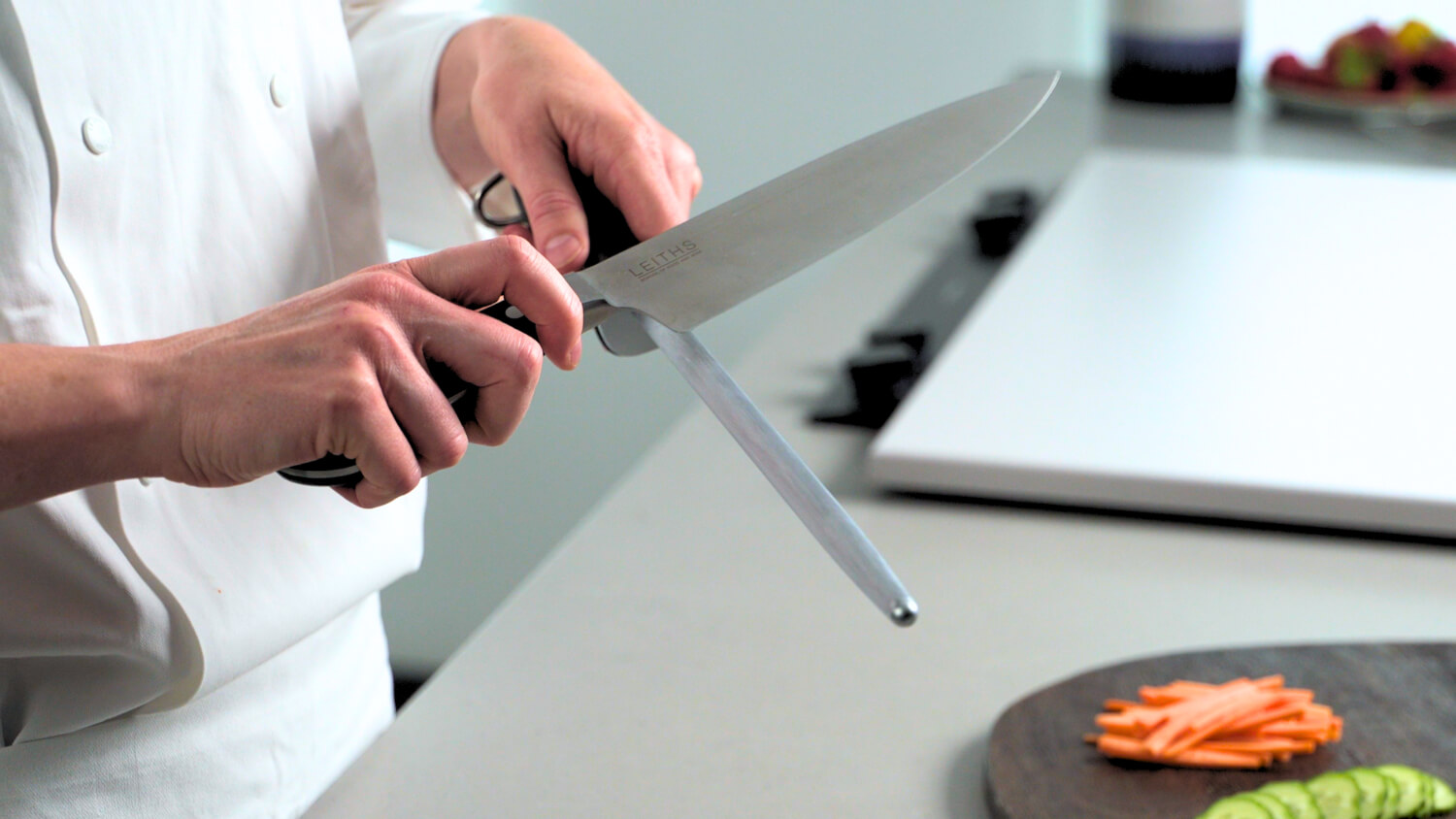
Think about how much time you spend chopping, slicing and dicing. If you're building up your knife collection, there are four we'd recommend investing in:
Your chef's knife is probably one of the most frequently used tools in your kitchen, so it's worth finding one that feels right.
If you're buying your first serious chef's knife, you'll likely notice a difference in how comfortably and precisely you can prepare ingredients.
And if you've been using the same knife for years, an upgrade might be worthwhile. Perhaps you'd prefer a lighter blade, a different handle or a thinner cutting edge. Just remember that a more expensive knife isn't automatically an improvement, particularly if your current one simply needs sharpening.
What to look for: A blade around 20cm long is a useful all-round size. Western-style knives tend to be sturdier, while Japanese-style knives are often lighter and thinner.
Steel hardness is worth considering too. Western-style knives are often around 56-58 on the Rockwell hardness scale (HRC), while Japanese knives commonly sit around 60-62. Harder steel can retain a fine edge for longer, but may be more prone to chipping.
If possible, try holding a knife before buying it. Comfort, balance and blade shape matter far more than elaborate patterns or decorative finishes.
Our cooking tip: Keep it sharp. Even the most expensive knife will struggle if it's blunt. Learn how to sharpen it properly or find a reliable sharpening service. And always wash and dry it by hand rather than putting it in the dishwasher.
If you regularly cook from scratch, a food processor can save you a surprising amount of preparation time.
It's useful for chopping vegetables, preparing breadcrumbs and blitzing together sauces. If you've never owned one, think about which preparation tasks take you the longest and whether a processor would make them easier.
If you've already got a food processor, there may be benefits to upgrading to a more substantial model. A larger bowl, more consistent slicing or a motor that copes better with demanding mixtures can all be worthwhile improvements.
However, if your current machine handles everything you ask of it, the latest model with another dozen attachments probably isn't necessary.
What to look for: A bowl capacity of around 2.5-3.5 litres will suit many home cooks. Look for a sturdy stainless steel chopping blade and a bowl that's easy to clean.
A pulse function is particularly useful for controlling texture, and motor quality is particularly important if you'll regularly be making thick pastes, grinding nuts or preparing pastry. Around 700-1,000W is a useful guide for a full-sized processor, although a well-designed motor can perform just as effectively with less power.
Don't be tempted by a huge box of accessories unless you know you'll use them. Most everyday jobs can be done with just a few attachments. It's also worth checking that replacement bowls and blades are available.
Our cooking tip: Make friends with the pulse button. If you're chopping vegetables, leaving the motor running can quickly turn them into a purée. A few short pulses give you more control and help you achieve a more even texture.
If you bake regularly, a stand mixer can be a great addition to your kitchen, particularly when you're short on time or preparing larger quantities.
It's particularly useful for enriched doughs, which can be tiring to knead by hand. It also takes some of the effort out of whisking meringues, creaming butter and sugar, or making large batches of buttercream.
On our courses, we teach kneading by hand and use electric hand mixers for suitable tasks, so you can develop your baking skills without needing a stand mixer. But if you're a frequent baker, a stand mixer can save you time and effort, particularly once you're familiar with how different mixtures and doughs should look and feel.
Already own one? If your mixer struggles with heavier doughs or the quantities you're preparing, Black Friday could be an opportunity to upgrade to a more capable model.
What to look for: A 4.5-5-litre bowl will suit many home bakers, but if you regularly make bread, check the maximum dough weight the machine can handle.
Don't assume a bigger motor or bowl automatically means better kneading. Look for reliable performance at low speeds, as well as enough control for whisking and mixing.
A dough hook, whisk and flat beater will cover most baking tasks, so focus on investing in the attachments you need rather than paying extra for a big bundle of additional attachments.
Our cooking tip: More speed isn't always better. Bread dough can become too warm or overworked if you mix it too aggressively. Follow the recommended speed settings and pay attention to how your dough is developing rather than relying solely on a timer.
Not every worthwhile Black Friday purchase needs to be a major investment. If you've already got the larger equipment covered, there are plenty of smaller tools that can make everyday cooking easier.
These are also worth considering if you've been using a cheaper version for years and fancy an upgrade.
Black Friday deals are already appearing, but don't let the countdown timers rush you into buying.
If you've spotted an offer on something you've been considering, do a little research before committing. Compare prices across retailers and check the exact model, materials and specifications.
It's also worth checking how the price has changed over the year. Black Friday isn't necessarily the cheapest time to buy every product, and a large reduction from the recommended retail price doesn't always mean you're getting a bargain.
Price-history websites can help you see what an item has sold for in recent months. If something hasn't dropped enough in price, consider setting up an alert where the retailer or comparison website allows it.
If you're upgrading something you already own, be especially careful about paying for features that won't change how you use it. The newest version isn't necessarily the one you need.
And don't forget warranties, spare parts and storage space. Equipment that lasts, can be repaired and is easy to get out when you need it is likely to be better value in the long run.
If you're looking to invest in your cooking skills as well as your kitchen kit, our online cookery courses are currently 25% off for Black Friday. Explore our courses and build your skills and confidence in the kitchen for years to come.


